Custom foam inserts and organizers should be specified from the complete device kit, case inner size, cavity layout, removal motion and target production method. A useful insert reduces movement without making the device difficult to remove. It must also fit the shell, lining, closure and accessory order as one system.
This guide helps buyers turn a rough storage idea into a factory-ready insert brief.
Quick Answer
| Spec area | What to provide | Why it matters |
|---|---|---|
| Case inner size | Length, width, depth and closure clearance | Prevents buckling or gaps |
| Device list | Camera, lens, batteries and accessories | Defines cavities and priorities |
| Fit | Snug, easy-pull or adjustable | Controls removal and movement |
| Construction | Foam, divider, formed or hybrid | Determines flexibility and repeatability |
| Production | Sample, quantity and packing | Helps select a practical process |
Fixed Inserts, Dividers and Hybrid Organizers
A fixed foam insert creates a defined cavity for a stable kit. It works well when the buyer wants a clean retail presentation and repeatable positions. A divider kit is more flexible when the user changes lenses, batteries or tools. A hybrid organizer can fix the camera and lens while leaving an open pocket for cables and small accessories.
Do not describe every padded interior as a foam insert. The construction method affects fit, edge quality, cleanability, weight and repeat production. Ask the factory to explain what the sample represents and whether the approved layout can be reproduced with the intended process.
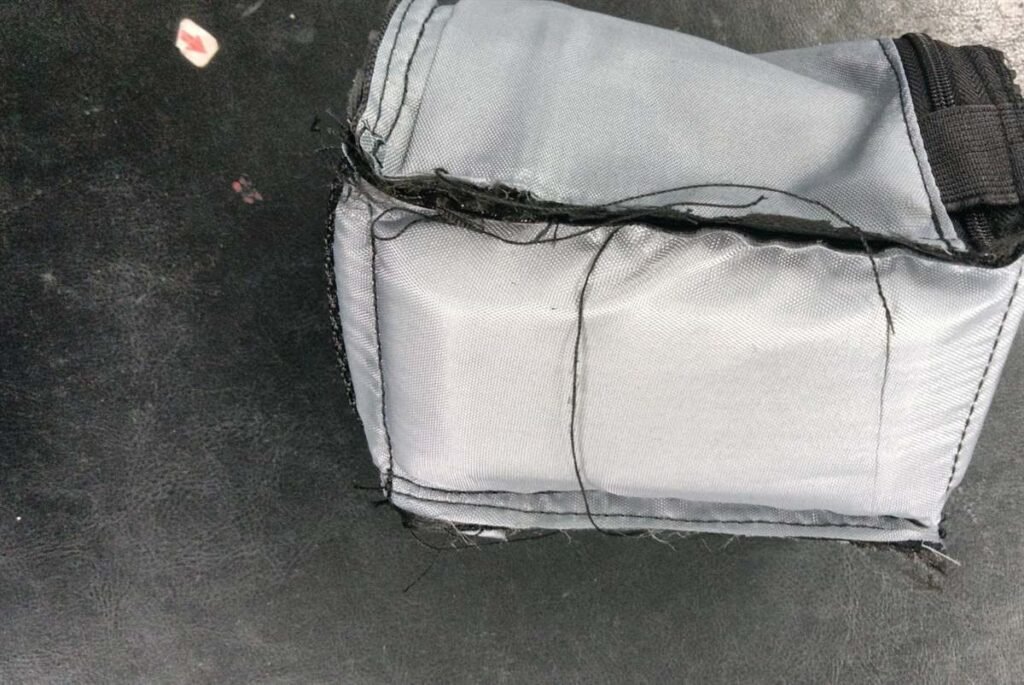
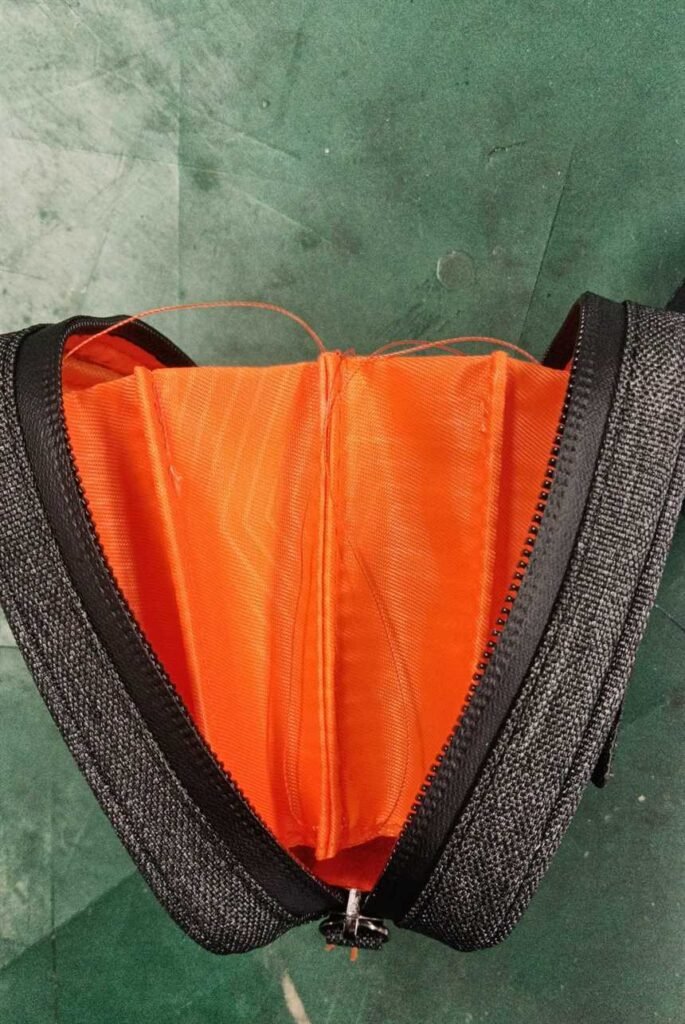
R150 records compact case assembly and R080 records divider construction. Together they show why an insert must be evaluated with the outer body, lining and opening. Evidence IDs: MFG-FILTER-001 and MFG-STITCH-001, status REVIEW.
Measure the Device and the Shell
Send real devices or measured drawings from multiple angles. Record the overall body, lens ring, grip, screen hinge, buttons, ports, protective film and any accessory that changes the final cavity. If an existing shell is used, send its inner length, width, depth, wall shape and closure clearance.
Published dimensions are a starting point, not always a final fit specification. A physical sample helps the factory see the areas that a drawing may miss. For a large kit, define which item is removed first and which items must never touch each other.
Choose the Layout Around User Motion
Place frequently used items near the opening. Add finger notches or pull areas where the device is difficult to lift. Separate hard accessories from optical surfaces, screens and finished panels. Check that the lid or zipper does not press on a raised item.
Draw the layout from above and from the side. The top view shows spacing; the side view shows stack height and closure clearance. State whether the case may be carried vertically, horizontally or inside another bag.
Foam, Lining and Surface Questions
Ask how the selected foam or padding behaves after compression, lamination, fabric covering and cutting. Inspect the cut edge, surface particles, lining cleanliness and cavity recovery. A softer contact surface may feel premium, while a more structured insert may hold a heavier device more consistently.
The material should be chosen with the case shell and user environment in mind. If a buyer needs special material declarations or market documentation, request the actual document, scope and validity. Do not publish a material certification claim without evidence.
Sampling and Repeat Production
Approve a physical sample with the actual device kit. Test insertion, removal, cavity order, movement, lid closure, zipper clearance and accessory separation. Record corrections in the layout drawing or sample report.
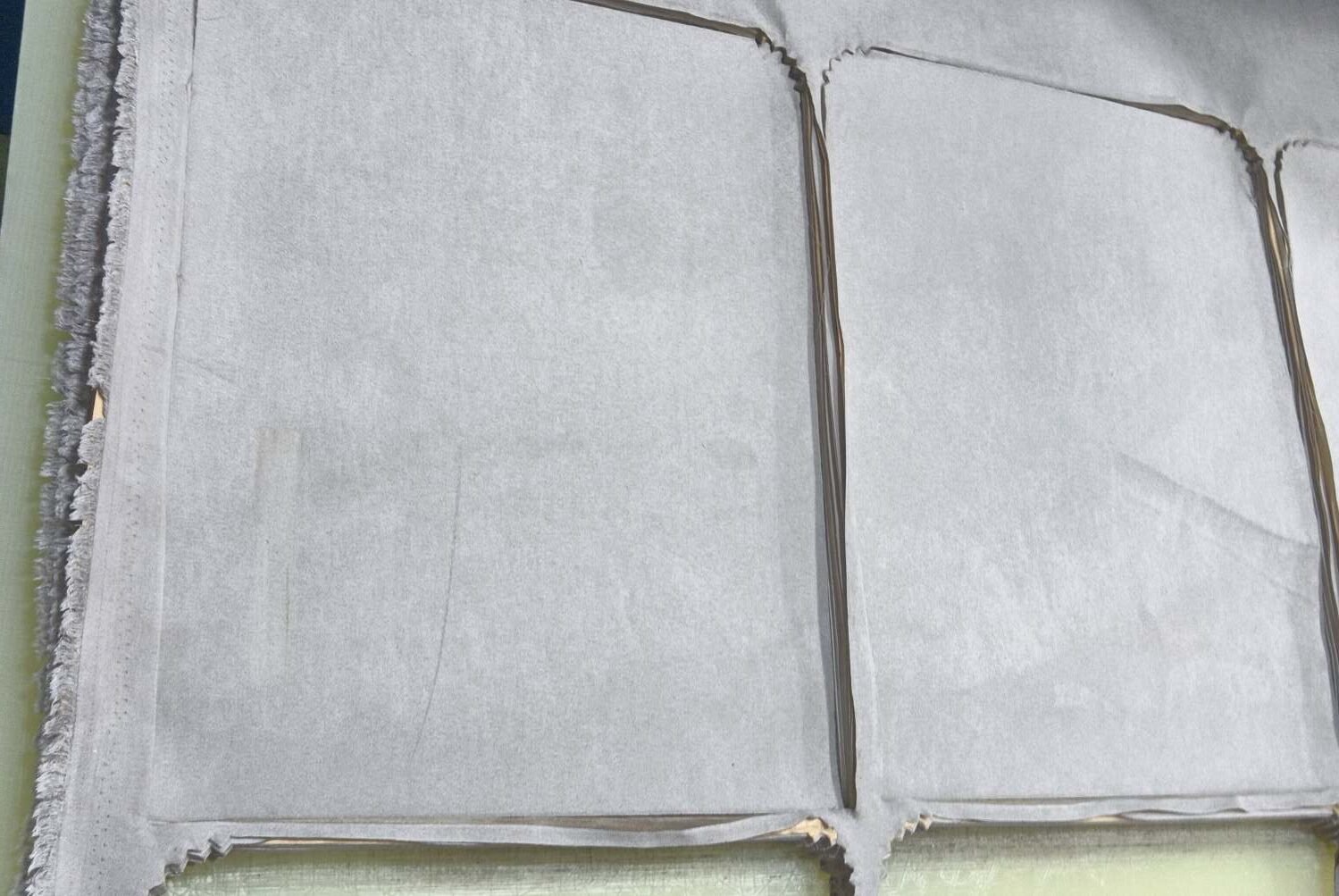
R105 records material cutting precision. This supports the buyer’s question about repeatable panel and cavity preparation, but it does not prove a universal tolerance or certification. Evidence ID: MFG-QC-001, status REVIEW.
What to Send for a Quote
Send the shell or inner dimensions, full device list, photos or drawings, layout sketch, fit preference, lining direction, logo, packaging, quantity and target date.
FAQ – Use Rank Math FAQ Block
How do I spec a custom foam insert?
Provide the case inner dimensions, full device list, real samples or drawings, cavity layout, fit preference, material direction, quantity and packaging needs.
How do I choose a custom camera case structure?
Choose the structure from the device kit, fit requirement, hand feel, carry condition, retail position, quantity and required repeatability.
What should I send to a camera case manufacturer?
Send device samples or drawings, accessory list, case dimensions, layout, material direction, logo artwork, packaging requirements and target quantity.
How many samples are needed for a custom case?
The standard minimum order quantity (MOQ) for this product family is 1000 units per order.
What is the MOQ for custom camera cases?
The standard minimum order quantity (MOQ) for this product family is 1000 units per order.
Can ZHIJIANG support private-label case development?
ZHIJIANG can discuss compatible case structures, inserts, branding and packaging as an independent OEM/ODM manufacturer, subject to project confirmation.
