For a brand ordering thousands of camera cases, the risk isn’t the sample — it’s whether unit 500 looks like unit 5. Batch consistency is the real test of a factory, and it’s driven by one thing: a documented, per-unit quality-control checklist. This guide shows what serious QC looks like on the floor, so you know what to ask a supplier for.
Quick Answer: What Good QC Covers
| Check | What’s inspected | Why it matters |
|---|---|---|
| Surface / print | Logo print, no defects or paint loss | First thing the buyer sees |
| Stitching | No skipped/broken/loose stitches, even seam allowance | Structural + visual quality |
| Edge finish | Edge oiling / binding, no gaps | Separates premium from cheap |
| Closure | Magnet pull, zipper travel, no snag | Daily-use reliability |
| Thread cleanup | Loose threads trimmed | Finished, professional look |
| Fit | Device seats correctly, no shift | Protection + perceived quality |
Why Batch Consistency Is the Real Test
Any factory can make a good sample — they’ll hand-finish one unit to win your order. The question is what happens at volume. Consistency comes from process control, not from inspecting harder at the end:
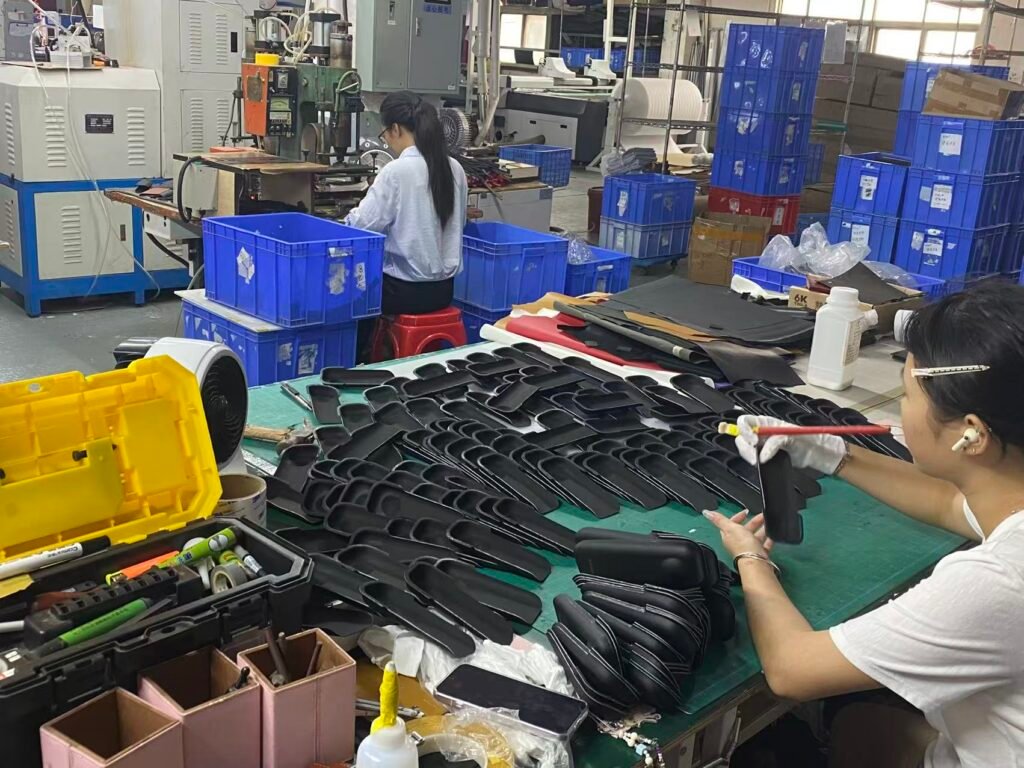
- Formed components over hand-cut parts. When a liner or panel is formed rather than carved by hand, every unit comes out with the same edges — no drift between the first and the five-hundredth piece.
- Fixtures and templates. Sewing on a template keeps stitch position identical unit to unit, instead of relying on each worker’s hand.
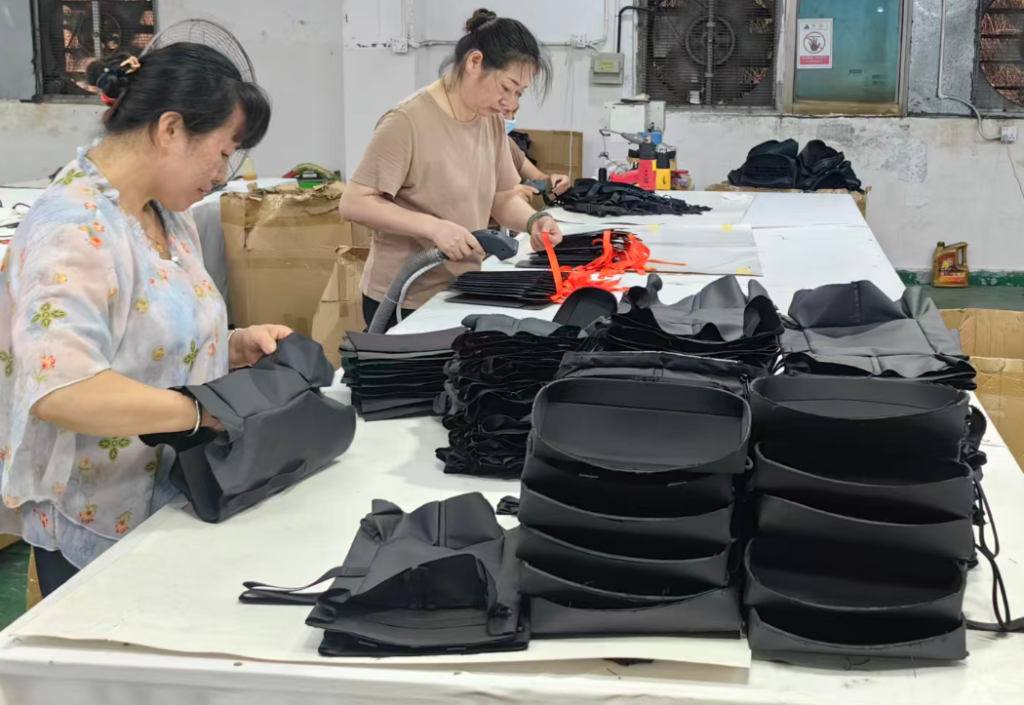
- A fixed per-unit checklist. Every finished unit runs the same inspection sequence — not a spot check of a few.
What a Per-Unit QC Checklist Looks Like
On our floor, finished goods run a fixed sequence on every unit, roughly:
- Front-panel surface — check the printed logo and surface for defects or paint loss.
- Stitching lines — no skipped, broken or loose stitches; even seam allowance.
- Edge finish — oiled or bound edges complete, no missed spots.
- Closure function — magnetic closure has proper pull and seats cleanly; zippers travel smoothly without snagging.
- Thread cleanup — any stray thread trimmed on the spot.
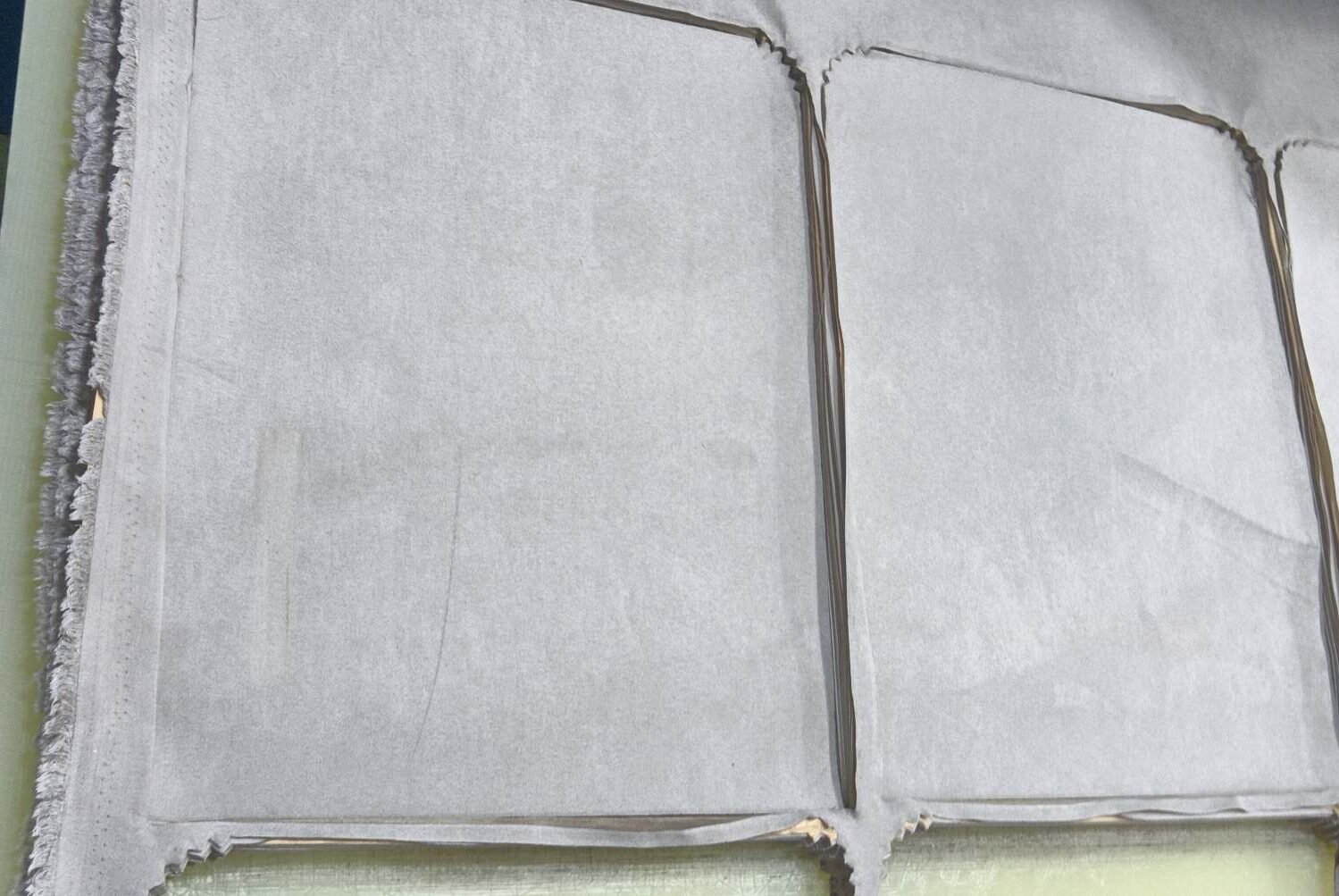
From our floor: the unglamorous truth is that quality at volume is won by the checklist, not by heroics. A fixed per-unit sequence — print, stitching, edge, closure, thread — is what keeps the ten-thousandth case looking like the first. For multi-piece products like a lens tube or a filter pouch, we also check that mesh pockets and bound edges haven’t frayed, because those parts fail quietly if you don’t look.
What to Ask a Supplier
- “Walk me through your finished-goods QC checklist.”
- “Is it run per unit or as a spot check?”
- “How do you keep unit 500 identical to unit 5 — formed parts, templates?”
- “Can I see workshop and QC footage of my exact product?”
- “Do you support factory audits or third-party inspection?”
A factory that answers these concretely is one you can trust at volume. A trader will struggle past the first question.
FAQ
What does quality control cover for camera cases?
Surface/print, stitching, edge finish, closure function, thread cleanup, and device fit — ideally checked on every unit against a fixed checklist.
How do you ensure batch consistency?
Through process control — formed components instead of hand-cut parts, sewing templates for identical stitch position, and a documented per-unit QC checklist — so late units match the first.
Why does unit 500 sometimes differ from the sample?
Because the sample was hand-finished but the process isn’t controlled. Consistency requires fixtures, formed parts, and per-unit inspection, not a good sample alone.
Do you support factory audits or inspection?
Yes. Our factory can support factory audits and product inspections.
What certifications should a case factory meet?
For US/EU supply, ask about RoHS/REACH/Prop 65 as applicable and odor-free, compliant adhesives.
Ordering at volume and worried about consistency?
Ask us for our QC checklist and workshop footage. → [Request a Quote]
