Private label camera bags succeed when the buyer controls the product brief, brand details, sample approval and repeat-order standard together. The factory should understand the bag’s device layout, target customer, logo method, packaging, quantity and quality checkpoints before quoting. A private label project is more than adding a logo to an existing bag.
This OEM guide gives a practical development route for camera brands, distributors and retailers building a branded protective bag line.
Quick Answer
| Stage | Buyer decision | Output |
|---|---|---|
| Product brief | Bag type, device kit and use case | Development specification |
| Brand system | Logo, color, label and packaging | Approved artwork pack |
| Sampling | Fit, access and appearance | Physical approval sample |
| QC | Defect classes and inspection points | Inspection plan |
| Launch | Quantity, packing and repeat rules | Production release |
Build the Private Label Brief
Start with the user and the kit. List the camera body, lenses, batteries, charger, microphone, cable, card wallet and small accessories. Mark what must be fixed, what may move and what the user needs to reach first.
Then define the bag format: shoulder bag, compact organizer, pouch, structured case or a bundle. Include the target outer size, opening direction, carrying method, interior layout and retail presentation. A factory can quote more accurately when the buyer provides a physical sample or a complete drawing rather than only a product photo.
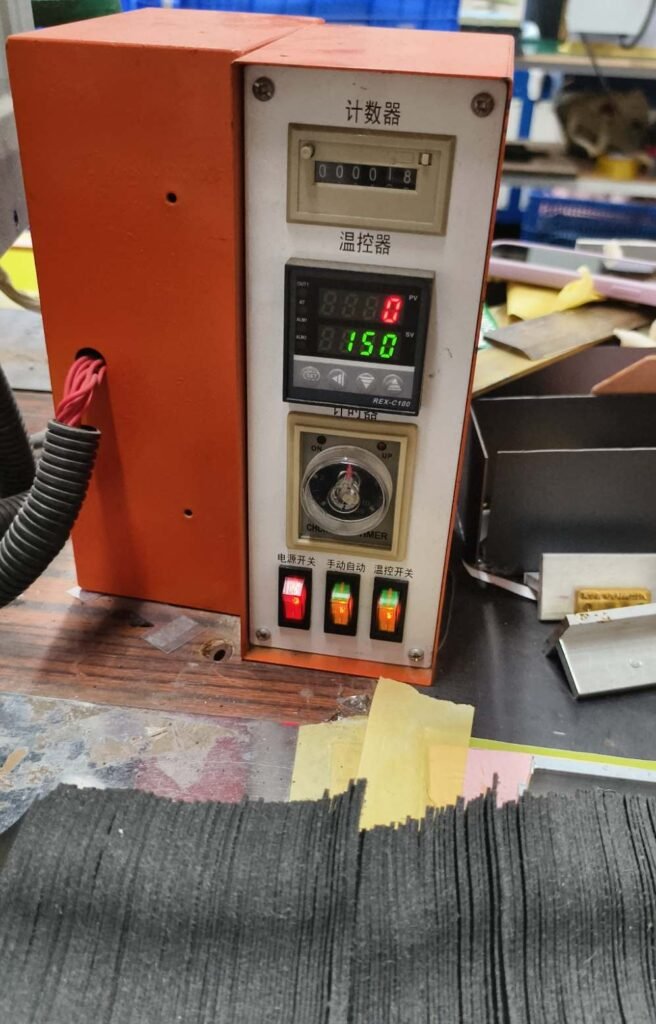
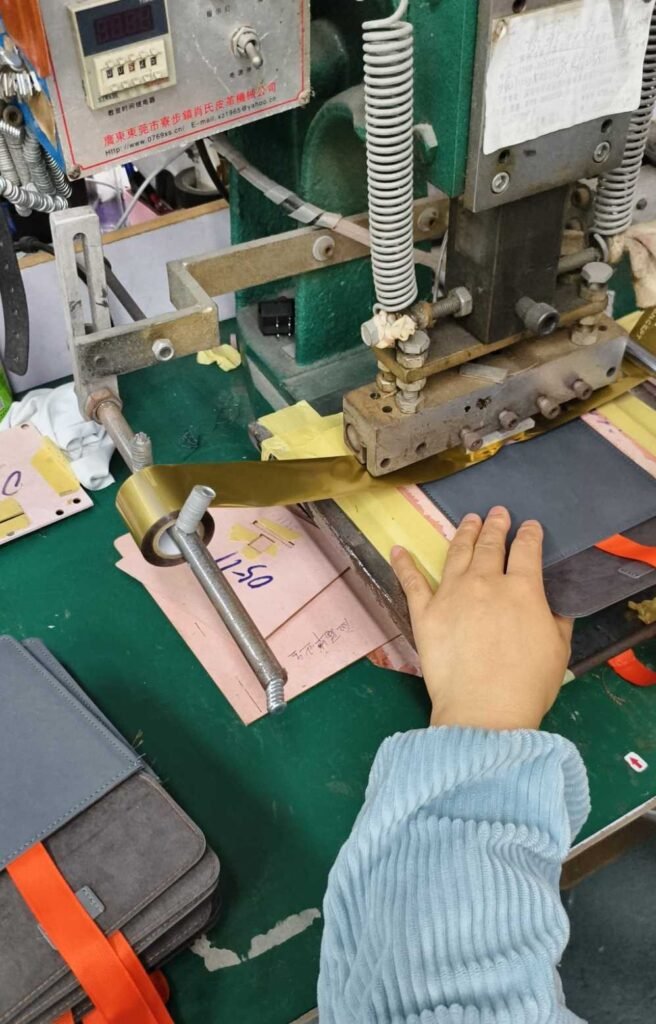
Factory evidence: R004 records a logo-pressing operation and the public image can be used as a branding-process reference. Evidence ID: MFG-STITCH-001 is not the correct claim for logo work; the image itself must be checked for sensitive marks before publication. The evidence index remains REVIEW for public manufacturing claims.
Logo and Presentation Options
Choose the logo method from the surface, brand position and expected handling. Heat pressing can create a discreet mark on a suitable panel. Foil stamping can give a gift or premium look. Woven labels, printed labels and removable cards may work better when the brand needs flexibility across several materials.
Send vector artwork, clear-space rules, color references, placement drawings and any trademark-use instruction. Ask for an artwork proof and physical sample before production. Do not assume a logo can transfer from one material to another without a new appearance check.
Packaging should be designed at the same time. Confirm whether the bag needs an insert card, barcode, hangtag, protective sleeve, carton mark or bundled accessory list.
Sample, QC and Repeat Orders
Approve three things separately: function, appearance and packing. Function includes device fit, access, carrying comfort and closure operation. Appearance includes logo position, surface, stitching, edge finish and lining cleanliness. Packing includes quantity, labels, protection and carton presentation.
The repeat-order standard should identify what may vary and what may not. Examples include logo location, key cavity dimensions, visible color, stitch alignment, edge coverage and hardware position. If the buyer wants a statistical sampling plan, define the lot, defect classes, sample size and acceptance rules with the quality team. Do not call every visual check an AQL inspection.
The evidence index describes finished products being checked for alignment, assembly and visible defects before packing. Evidence ID: MFG-QC-001, status REVIEW. It requires internal approval before publication.
OEM Questions to Resolve Before Order
- Is the project OEM, private label, or a modified existing structure?
- Who owns the final pattern, artwork and approved sample?
- Which materials and logo methods are approved for the market?
- What is the target order quantity and repeat forecast?
- What is the packaging and labeling requirement?
- Which inspection plan and defect definitions apply?
- What happens when the device or artwork changes?
FAQ – Use Rank Math FAQ Block
What is a private label camera bag?
It is a camera bag manufactured for a buyer’s brand, usually with agreed product structure, logo, labeling, packaging and quality requirements.
How do I find a private label camera bag manufacturer?
Prepare a device list, layout brief, logo artwork, packaging direction, target quantity and sample requirements, then ask the factory to explain its development and QC process.
Can a camera bag factory add my logo?
Yes, depending on the material and approved method. The logo position, artwork, color and physical appearance should be confirmed before bulk production.
What is the difference between OEM and private label?
Private label commonly uses a brand-owned presentation and may adapt an existing structure, while OEM can refer to a project built to the buyer’s approved product requirements. Confirm the exact scope in the quotation.
What is the MOQ for private label camera bags?
The standard MOQ for a custom camera filter pouch is 1000 units per order. The exact MOQ may vary depending on pouch size, slot structure, lining material, logo method, packaging requirements and whether a new sample or tooling adjustment is needed.
